.png)
.png)
The Ancient Roots of Sugaring Hair Removal
A small ball of sugar paste can feel almost too simple to be historic. It has no sleek cartridge, no plugged-in warmer, no long ingredient list. Just sugar, water, and lemon, cooked into a soft amber paste and worked over the skin.
That simplicity is part of the point. Sugaring is not a new trend dressed up for modern beauty menus. Sugar-based hair removal has roots going back centuries, and people often connect it with Middle Eastern and North African beauty traditions. Long before salon appointments and online tutorials, smooth skin was shaped by household knowledge, regional ingredients, and rituals passed between generations.
Sugaring’s story is not one single line from the ancient world to today. It is a set of overlapping traditions, practical choices, and cultural meanings. The method survived because it worked, because the ingredients were familiar, and because body care often lived where daily life, celebration, and community met.

Sugaring belongs to a long history of body care
Hair removal appears in many ancient and traditional cultures. People used tweezers, threads, pumice-like stones, resins, waxes, oils, and pastes. What changed from place to place was the material at hand and the meaning attached to grooming.
Sugaring stands out because its core recipe is so modest. A basic paste uses:
Sugar
Water
Lemon juice or another acidic ingredient
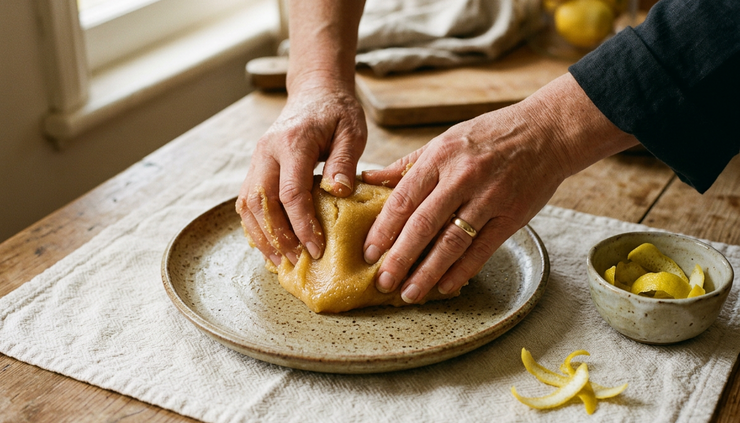
When cooked, these ingredients become a pliable paste that can grip hair. Depending on the method, the paste may be pressed onto the skin and removed by hand, or used with strips. Many traditional descriptions focus on hand sugaring, where the paste is kneaded, spread, and flicked away without fabric.
This is one reason the method traveled well through households. It did not require rare tools. It could be prepared in a kitchen. It also fit into societies where beauty knowledge often moved through family lines, especially among women preparing one another for daily life, marriage, holidays, and bathing rituals.
The exact history is hard to pin down because everyday beauty practices were not always recorded in formal texts. Many were learned by watching, helping, and repeating. That makes sugaring a good reminder that not all important cultural knowledge arrives through written records. Some of it lives in hands.
Middle Eastern and North African traditions shaped sugaring’s identity
Sugaring is widely associated with the Middle East and North Africa, where sugar, citrus, bathing customs, and detailed grooming practices have long played important roles in personal care. In many places, hair removal was not only cosmetic. It could relate to cleanliness, comfort in hot climates, religious or social customs, and preparation for major life events.
Regional names and recipes vary. In Arabic-speaking areas, sugar paste is often linked with terms such as halawa, a word connected to sweetness. That makes sense, since the paste looks like caramel and comes from cooked sugar. Similar sugar-based methods also appear in Persian, Turkish, Levantine, Egyptian, and North African contexts, though local ingredients and techniques differ.
The hammam, or public bathhouse, also matters in this history. Across parts of the Middle East and North Africa, bathing was never just about getting clean. It could be social, restorative, and ceremonial. Exfoliation, oiling the skin, washing the hair, and removing body hair could all be part of a larger care routine.
In that setting, sugaring made practical sense. Warm water softened the skin. Exfoliation helped clear dead skin cells. A sugar paste could remove hair while leaving behind a clean feel. The whole process belonged to a broader idea of tending the body with patience.
Sugaring was less like a product and more like a practice. Its value came from the recipe, the technique, the setting, and the knowledge of the person using it.

The ingredients tell a story of trade, climate, and daily life
The beauty of sugaring lies in its ingredients, but those ingredients also carry history.
Sugar was once far more precious than it is in a modern grocery aisle. Its spread across regions ties into agriculture, trade, conquest, migration, and changing foodways. As sugar became more available in parts of the Middle East, North Africa, and the Mediterranean world, it entered kitchens, medicine cabinets, and beauty routines.
Lemon or another acidic ingredient helped transform cooked sugar from a hard candy into a soft, workable paste. The acid helps prevent the sugar from crystallizing too quickly, which gives the paste its elastic texture. Even without modern chemistry language, skilled makers understood the behavior of the mixture through sight, touch, smell, and timing.
Traditional preparation depended on sensory cues:
The color shifting from pale gold to amber
The bubbles changing size as water cooked off
The paste thickening as it cooled
The texture becoming stretchy rather than brittle
That kind of knowledge is easy to underestimate. A good sugar paste is neither too runny nor too hard. If it is undercooked, it may not grip hair well. If it is overcooked, it can become stiff and difficult to use. The person making it has to understand heat, timing, humidity, and touch.
In hot climates, a simple paste also offered practical benefits. It required few supplies, and used ingredients that could be stored. For many households, that mattered. Beauty practices often endure when they are both meaningful and useful.
Sugaring was often part of preparation and celebration
Across many cultures, grooming has marked transition. People prepare the body before weddings, holidays, religious observances, births, and seasonal gatherings. Sugaring fits naturally into that pattern.
In Middle Eastern and North African traditions, body care before a wedding could be a shared experience. Hair removal, bathing, fragrance, henna, oils, and skin care might all appear in different combinations, depending on the community. These rituals were not identical everywhere, and they changed over time. Still, they often carried a sense of readiness.
Sugaring could be intimate and communal at once. Someone might prepare the paste at home. A relative or experienced practitioner might apply it. Conversation could fill the room. The process could include instruction, teasing, reassurance, or quiet concentration.
Modern beauty writing often treats hair removal as a private maintenance task. Historical and traditional contexts show a wider picture. Grooming could create connection. It could signal care from one person to another. It could also reflect social expectations, which were not always light or optional.
That mix is worth holding honestly. Sugaring’s history is beautiful, but it also sits within long human debates about beauty, modesty, gender, class, and belonging. People used it for many reasons, from comfort to custom to personal preference.
The technique is different from waxing
Sugaring and waxing are often grouped together because both remove hair from the root. Still, they are not the same.
Traditional sugar paste is water-soluble, so it rinses away with warm water. Wax is oil-soluble and usually needs oil or a remover. Sugar paste also has a different texture. It can be softer, less sticky to the touch, and easier to reshape during use.
Many practitioners apply sugar paste against the direction of hair growth and remove it in the direction of growth. This differs from common waxing methods, where wax is often applied with hair growth and removed against it. Technique varies, especially between strip sugaring and hand sugaring, but this direction of removal is one reason some people prefer it.
That does not mean sugaring is painless. Hair removal from the root can sting, especially on sensitive areas or coarse hair. Skill matters. Skin preparation matters. So does aftercare.
A few common principles have carried well into modern practice:
Clean skin helps the paste grip hair.
Dry skin works better than oily skin.
Short hair may be harder to remove.
Freshly treated skin needs gentle care.
Sun, exfoliants, and friction can irritate skin right after hair removal.
These are practical details, not marketing claims. They show why a simple method still takes practice. The recipe may be short, but the craft is real.
Modern sugaring is a revival and a continuation
Sugaring has gained fresh attention in salons, spas, and at-home beauty routines across the United States. Part of the appeal comes from ingredient awareness. Many people like that the paste can be made from familiar kitchen ingredients. Others appreciate its long history, lower-waste possibilities, or the way it can be performed without disposable strips when done by hand.
Yet calling sugaring “new” erases the people and places that kept the practice alive. It also makes a traditional method sound like a recent invention. A more respectful view sees modern sugaring as both a revival and a continuation.
Today, sugaring appears in many forms:
Traditional hand paste
Strip sugaring
Professional salon sugaring
At-home sugaring
A thick paste is molded by hand and removed with a flicking motion.
A softer sugar mixture is applied and removed with cloth or paper strips.
Trained practitioners use refined techniques, sanitation standards, and skin assessment.
People make or buy paste and use it on small areas with care and patience.
This modern range does not make one version the only “real” one. Traditions evolve. Recipes adapt. People create safer, cleaner, and more consistent ways to practice an old method.
At the same time, credit matters. When beauty brands and salons talk about sugaring, they should name its deep cultural roots rather than presenting it as a trend with no past. Respect does not require freezing a practice in time. It asks for memory.

Why this ancient method still feels relevant
Sugaring lasts because it meets a basic standard that many beauty practices never reach. It is simple, adaptable, and understandable. The ingredients are recognizable. The process is visible. The technique rewards skill rather than machinery.
Its history also adds depth to a routine that can feel ordinary. A jar of sugar paste points back to kitchens, bathhouses, family rituals, wedding preparations, and regional beauty knowledge. It shows how personal care can travel across centuries without losing its practical core.
That does not mean everyone needs to use it. Hair removal is a choice, and smooth skin is not a requirement. Sugaring’s value is not that it tells people what to do with their bodies. Its value is that it shows how much history can live inside a small, everyday act.
The ancient roots of sugaring hair removal remind us that beauty traditions are often older, richer, and more global than the labels on modern products suggest. A little sugar, water, and lemon can carry a long memory.


Comments